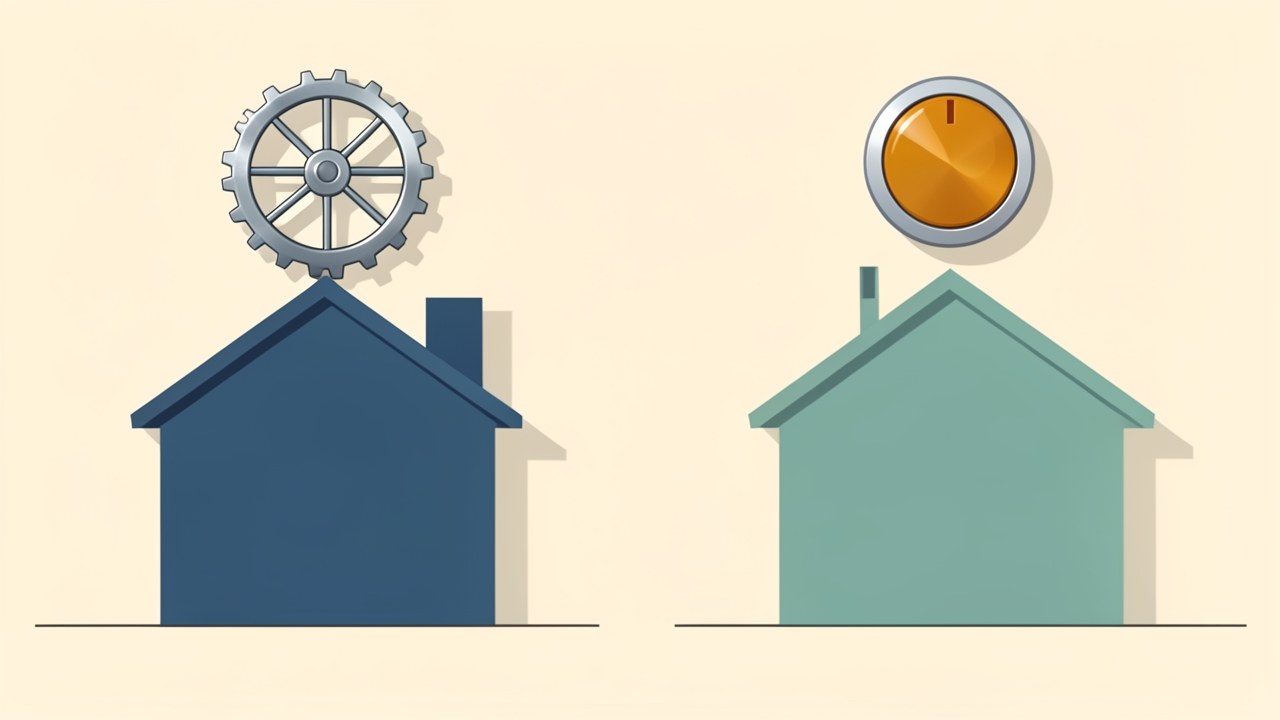
Overview: Fixed-Rate and Adjustable-Rate Mortgages
A fixed-rate mortgage has an interest rate that remains the same for the entire loan term. Because the rate never changes, your monthly principal and interest payment stays the same for the life of the loan. That stability makes budgeting straightforward and eliminates the risk of payment increases due to interest rate changes.
An adjustable-rate mortgage (ARM) has an interest rate that can change periodically, usually in relation to an index. The initial rate is typically lower than a comparable fixed-rate mortgage, but after a set period, the rate can adjust up or down, and your monthly principal and interest payment may change accordingly. ARMs come in different structures, such as the 5/1 ARM, where the rate is fixed for the first five years and then adjusts annually.
Sources: Consumer Financial Protection Bureau
Comparison Criteria: What Matters Most
To choose between a fixed-rate and an ARM, you need to understand the key differences across several criteria. The following factors capture the practical trade-offs.
- Rate stability: Fixed-rate mortgages keep the same interest rate for the entire loan term. ARMs have an initial fixed period, after which the rate can change regularly.
- Payment predictability: With a fixed-rate loan, your principal and interest payment never changes. With an ARM, the payment stays the same during the initial period but can increase or decrease after each adjustment.
- Initial rates: ARMs typically offer a lower initial interest rate than a comparable fixed-rate mortgage, which can mean a lower starting payment.
- Long-term cost: Because ARMs can adjust upward, they can end up costing more than a fixed-rate loan if rates rise. Fixed-rate loans provide certainty over the full loan term.
- Risk: Fixed-rate mortgages carry lower risk for the borrower because there are no surprises. ARMs carry higher risk due to potential payment increases.
Sources: Consumer Financial Protection Bureau
How an ARM Rate Is Structured
If you're considering an ARM, it's important to understand the components that determine your rate and how it can change over time.
An ARM's interest rate is made up of an index plus a margin. The index is a benchmark interest rate that reflects general market conditions, and the margin is a fixed percentage added to the index. After the initial fixed period, your rate is recalculated based on the current index value plus your margin. Rate caps limit how much the rate can increase at the first adjustment and over the life of the loan. Initial adjustment caps are often 2% or 5% percentage points, and lifetime caps also exist to limit the maximum increase over the loan term.
- Initial rate period: The initial rate may stay the same for months, one year, or a few years before adjusting.
- Adjustment period: The rate can adjust at regular intervals, with common periods ranging from one month to ten years. One year is the most common.
- Index and margin: The new rate equals the index value plus a margin, both of which are defined in your loan documents.
- Caps: Rate caps limit how much the rate can change at each adjustment and over the life of the loan.
Sources: Consumer Financial Protection Bureau
When a Fixed-Rate Mortgage Makes More Sense
Fixed-rate mortgages are the most popular choice among borrowers, with 85-95% of buyers choosing them from 2008-2022. They are often a good fit when you plan to stay in your home for a long time and value predictable payments.
If you want to know exactly what your principal and interest payment will be for the entire loan term, a fixed-rate mortgage eliminates the worry of rising rates. This can be especially important if your budget is tight or you prefer a stable monthly payment for long-term planning.
- You expect to stay in the home for many years, well beyond the initial fixed period of an ARM.
- You want the security of a constant payment, regardless of market conditions.
- You are not comfortable with the possibility of higher payments in the future.
Sources: Consumer Financial Protection Bureau
When an ARM Might Be Advantageous
An ARM can be a reasonable choice if you plan to sell your home during the initial fixed period or if you expect your income to grow. Because ARMs often start with a lower initial rate, you may benefit from lower payments early on.
However, an ARM carries the risk of higher payments after the initial period ends. If you do not sell or refinance before the first adjustment, your rate could jump, increasing your monthly payment significantly. The appeal of an ARM depends heavily on your future plans and market conditions.
- You plan to sell the home within the initial fixed period.
- You expect to refinance before the first rate adjustment.
- You are comfortable with the risk of payment increases in exchange for a lower initial rate.
Sources: Consumer Financial Protection Bureau
risk tolerance
Choosing between a fixed-rate mortgage and an ARM requires an honest look at your finances and your comfort with uncertainty. Start by asking yourself how long you plan to stay in the home and whether your monthly budget could absorb a higher payment if rates rise.
Consider the trade-offs: a fixed-rate mortgage gives you payment stability, while an ARM may offer a lower initial rate. If you prioritize predictable payments and long-term certainty, a fixed-rate loan is likely the better fit. If you are willing to accept the risk of future increases and plan to move or refinance in the near term, an ARM might be worth considering.
- Calculate what you can afford today and what you could afford if your payment increased.
- Think about your job stability and income growth potential.
- Review the ARM's initial rate period, adjustment frequency, index, margin, and caps carefully.
- Weigh the peace of mind of a fixed rate against the initial cost savings of an ARM.
Sources: Consumer Financial Protection Bureau, Experian, GO Mortgage
Side-by-Side Comparison: Fixed-Rate vs. ARM
The table below summarizes the key differences between fixed-rate and adjustable-rate mortgages across the criteria that matter most to borrowers.
| Attribute | Fixed-Rate Mortgage | Adjustable-Rate Mortgage (ARM) |
|---|---|---|
| Interest rate stability | Rate set at closing and never changes | Fixed for initial period, then adjusts based on index plus margin, within caps |
| Monthly principal and interest payment | Stays the same for the entire loan term | Stays the same during initial period; may increase or decrease after each adjustment |
| Initial interest rate level | Higher than initial ARM rate | Lower than a fixed-rate mortgage |
| Risk level | Lower risk, no surprises | Higher risk, uncertainty |
| Borrower share (2008-2022) | 85-95% of buyers | 5-15% of buyers |
Sources: Consumer Financial Protection Bureau
Frequently asked questions
What is an adjustable-rate mortgage?
An adjustable-rate mortgage (ARM) is a home loan with an interest rate that can change periodically after an initial fixed period. The rate is typically tied to an index plus a margin, and it is subject to rate caps that limit how much it can increase. The monthly principal and interest payment may go up or down when the rate adjusts.
Sources: Consumer Financial Protection BureauHow often can an ARM rate change?
The adjustment schedule varies by lender and loan product. Common adjustment periods range from one month to ten years, with one year being the most common. After the initial fixed period, the rate adjusts at the specified frequency, such as annually.
Sources: Consumer Financial Protection BureauCan I refinance an ARM to a fixed-rate loan?
Yes, you can refinance an adjustable-rate mortgage into a fixed-rate loan, just as you would refinance any mortgage. Refinancing involves obtaining a new loan to pay off the existing one, and it can be a way to lock in a stable rate if you want to avoid future adjustments. The decision to refinance depends on factors like current rates, your financial situation, and how long you plan to stay in the home.
Sources: Consumer Financial Protection BureauAre ARM rates always lower than fixed rates?
ARMs typically have a lower initial interest rate than a comparable fixed-rate mortgage. However, after the initial period, the rate can adjust upward, and it may eventually exceed the rate on a fixed-rate loan. Whether an ARM remains cheaper over time depends on how interest rates move and the specific terms of your loan, such as caps and margins.
Sources: Consumer Financial Protection Bureau, ExperianSources
- Consumer handbook on adjustable-rate mortgages — Consumer Financial Protection Bureau
- Adjustable-Rate Mortgages Find out how your payment can change over time — Consumer Financial Protection Bureau
- Understand the different kinds of loans available — Consumer Financial Protection Bureau
- What is the difference between a fixed-rate and adjustable-rate mortgage (ARM) loan? — Consumer Financial Protection Bureau
- Mortgage Key Terms — Consumer Financial Protection Bureau
- Mortgage financing options in a higher interest rate environment — Consumer Financial Protection Bureau
- If I am considering an adjustable-rate mortgage (ARM), what should I look out for in the fine print? — Consumer Financial Protection Bureau
- Fixed-Rate vs. Adjustable-Rate Mortgage: What’s the Difference? — Experian
- Adjustable-Rate vs. Fixed-Rate Mortgages in a Falling Rate Environment — GO Mortgage